

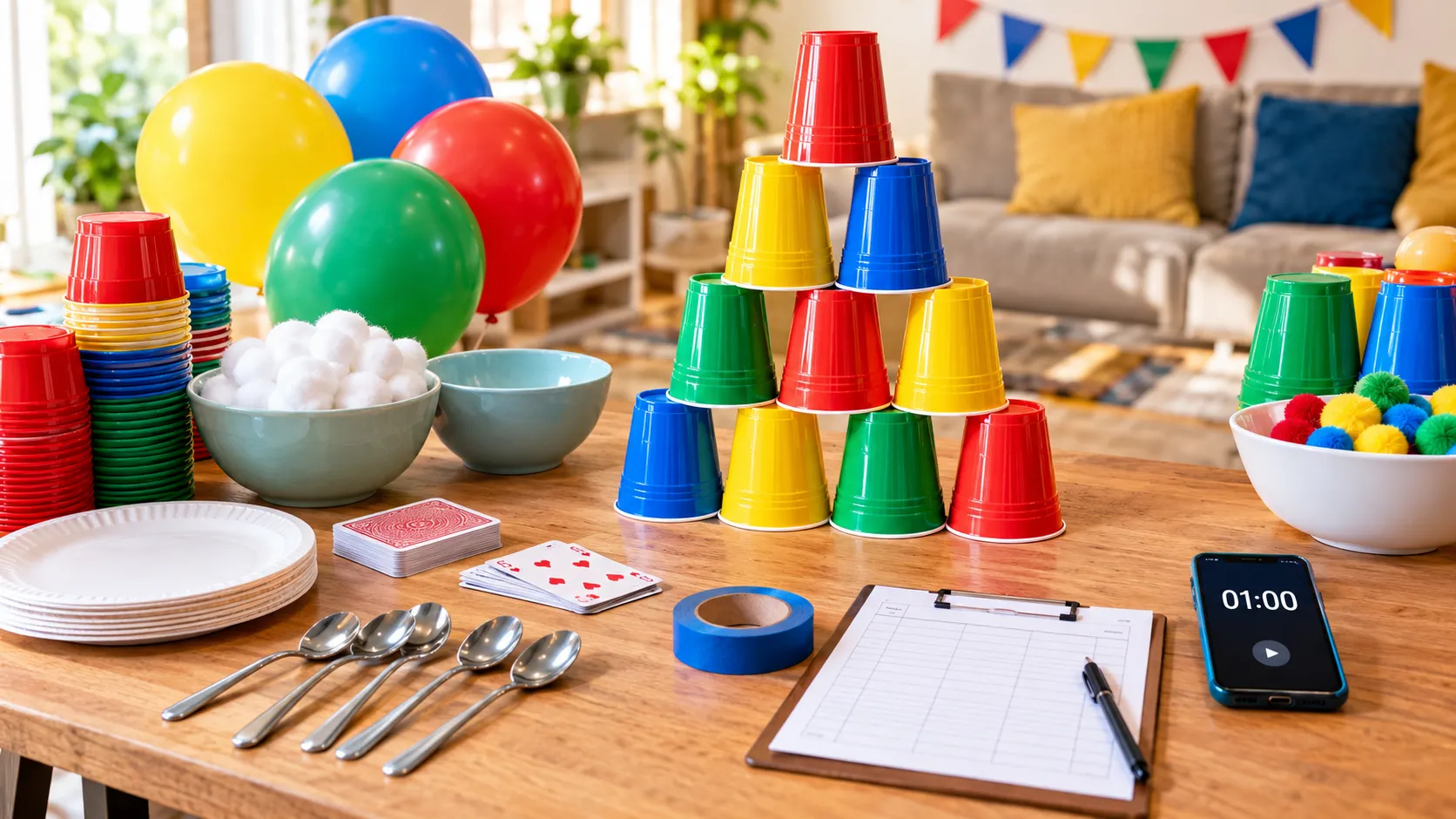
Minute-to-Win-It games turn ordinary household items into hilarious little challenges that get everyone laughing. You only need a few simple supplies, a timer, and a group of people who don’t mind looking a little silly. These quick games work beautifully for birthday parties, family nights, school events, and holiday gatherings. Let’s set up a fun DIY game night without spending a fortune or turning your house upside down!
Why Minute-to-Win-It Games Are Perfect for Any Party
The best party activities don’t need expensive equipment or complicated rules. Minute-to-Win-It games keep things simple, exciting, and easy for everyone to join.
You can prepare most challenges in advance using items you probably already have at home. Paper cups, cotton balls, plastic spoons, balloons, and playing cards can provide plenty of entertainment.
Here’s why these games are worth trying:
- Budget-friendly fun: Use everyday supplies instead of buying special party equipment.
- Quick rounds: Each challenge lasts just 60 seconds, so nobody has to wait long for another turn.
- Easy for all ages: Adjust the difficulty for children, teens, and adults.
- Perfect for groups: Play individually, in pairs, or as teams.
- Simple setup: Most games need little preparation and minimal cleanup.
My favorite part? Even the most confident player can struggle with a stack of plastic cups when the clock starts ticking. Suddenly, everyone becomes a very serious professional cup stacker.
Materials and Tools for Your DIY Game Night

You don’t need a craft room full of supplies to create an entertaining game station. Gather a few affordable items, and you’ll have enough materials for several different challenges.
What You’ll Need
- Plastic or paper cups for stacking games.
- Cotton balls or pom-poms for transfer challenges.
- Plastic spoons for balancing games.
- Balloons for balloon-based activities.
- Playing cards for stacking and balancing challenges.
- Lightweight paper plates for tossing games.
- Empty plastic bottles or cups to use as targets.
- A bowl or two for collecting small objects.
- Painter’s tape to mark start lines and play areas.
- A stopwatch, phone timer, or kitchen timer.
- Paper and a pen to record scores.
- Small prizes, stickers, or homemade certificates for winners.
Affordable substitutes: Use rolled-up socks instead of pom-poms, recycled cardboard cups instead of plastic cups, and a kitchen timer instead of buying a separate stopwatch.
Choose lightweight, unbreakable materials whenever possible. If young children are playing, avoid small objects that could create choking hazards.
How to Set Up Your Minute-to-Win-It Game Station

A little preparation makes the entire party run more smoothly. Instead of searching for missing supplies while everyone waits, arrange your games before the guests arrive.
Step 1: Choose Your Games
Pick three to five challenges for a short party or six to eight for a longer gathering. Mix easy activities with slightly trickier ones so everyone gets a chance to succeed.
For example, combine cup stacking, cotton-ball transfers, balloon balancing, and card stacking.
Step 2: Prepare the Playing Area
Clear a table or floor space for each challenge. Use painter’s tape to mark starting positions, throwing lines, and boundaries where needed.
Keep enough room between stations for players to move without bumping into chairs or other guests.
Step 3: Arrange the Materials
Place the supplies for each game in a separate tray, basket, or box. Label each station with the game name and a short explanation of the rules.
This simple step saves time and prevents players from accidentally borrowing the cotton balls intended for another challenge.
Step 4: Set Up the Timer and Scoreboard
Choose one person to operate the timer and record scores. If everyone wants to participate, rotate the job between rounds.
Write each player’s name on a sheet of paper and award one point for every completed challenge. You can also give bonus points for winning a round.
Step 5: Explain the Rules Before Starting
Demonstrate each challenge before the timer begins. Make sure everyone understands what counts as success and whether players can restart after making a mistake.
Once the rules are clear, count down from three and start the fun!
Step-by-Step DIY Minute-to-Win-It Games

Now comes the best part: creating the actual game challenges. These activities use inexpensive materials and require very little setup.
Game 1: The Cup Stack Challenge
Materials: 21 lightweight cups and a flat table.
- Give each player 21 cups.
- Ask them to build a pyramid with six cups on the bottom row, five on the next row, and so on until one cup sits at the top.
- Start the 60-second timer.
- Players must build the complete pyramid and carefully take it apart before time runs out.
- Award one point to each player who completes both tasks.
Make it harder: Require players to rebuild the pyramid after taking it down. Just be prepared for a few dramatic cup avalanches.
Game 2: Cotton-Ball Transfer
Materials: Cotton balls or pom-poms, two bowls, a spoon, and a timer.
- Place the empty bowl beside the bowl filled with cotton balls.
- Give the player a spoon and ask them to transfer the cotton balls into the empty bowl.
- The player must move each cotton ball using only the spoon.
- Start the timer and allow 60 seconds.
- Count the transferred cotton balls when time ends.
For an extra challenge, ask players to hold the spoon in their non-dominant hand. Use larger pom-poms for younger children.
Game 3: Balloon Keep-Up
Materials: One balloon per player and a timer.
- Give each player an inflated balloon.
- Ask everyone to stand in a clear playing area.
- Start the timer and have players tap their balloons into the air.
- Players must keep their balloons from touching the floor for 60 seconds.
- Anyone whose balloon touches the floor can either restart or earn points based on how long they keep it airborne.
For a team version, give each team one balloon and let members work together to keep it up.
Safety tip: Keep balloons away from very young children, and remove broken balloon pieces immediately because they can cause choking.
Game 4: Paper Plate Toss
Materials: Paper plates, a few empty plastic bottles, and painter’s tape.
- Arrange three or four empty bottles on the floor or a sturdy table.
- Mark a throwing line with painter’s tape.
- Give each player five paper plates.
- Start the timer and let players toss the plates toward the targets.
- Award one point for each bottle successfully knocked over or each plate that lands around a target, depending on your chosen rules.
Use lightweight plates and soft, unbreakable targets. Move the throwing line closer for younger players and farther away for adults who want a challenge.
Game 5: The Playing-Card Tower
Materials: A deck of playing cards and a flat table.
- Give each player an equal number of playing cards.
- Explain that the goal is to build a freestanding card tower.
- Players can fold the cards slightly or lean them together to create stable supports, depending on the rules you choose.
- Start the timer and give everyone 60 seconds to build.
- Count a tower only if it stands unsupported for three seconds after the player removes their hands.
This challenge rewards patience as much as speed. A tiny breeze or an enthusiastic table bump can turn an impressive tower into a pile of cards.
Tips for Making Your Game Night More Exciting

The games themselves provide plenty of entertainment, but a few thoughtful details can make the entire event feel special.
Adjust the Difficulty
For children, use larger cups, bigger targets, and fewer objects. For teens and adults, introduce extra rules, smaller targets, or team-based challenges.
You can also create a final championship round featuring the two players with the highest scores.
Avoid Common Game-Night Mistakes
- Don’t choose too many games: Long explanations can drain the excitement before the first round even begins.
- Don’t make every challenge difficult: Include simple wins so beginners stay interested.
- Don’t forget spare supplies: Keep extra cups, balloons, and paper plates nearby.
- Don’t change the rules halfway through: Explain scoring and winning conditions before each round.
- Don’t ignore the playing space: Clear slippery rugs, sharp objects, and obstacles before starting.
Add DIY Decorations and Prizes
Make simple game signs from colored cardstock and markers. Use bright paper, fun lettering, and small drawings to identify each station.
For prizes, fill paper bags with stickers, pencils, candy suitable for your guests, or inexpensive party favors. You can also make homemade certificates like “Cup Stacking Champion” or “Most Creative Player.”
If you’re hosting a themed party, match your colors and decorations to the occasion. Red and orange work for Halloween, while bright pastels suit spring birthdays.
Keep Score Without Making Things Too Competitive

Some guests love a scoreboard, while others prefer playing just for laughs. Offer both options by awarding points for completed challenges and giving special recognition for teamwork, creativity, or the funniest moment.
Remember, the goal is to have fun. Nobody needs to start a formal investigation because their cousin won the cotton-ball round.
Related Posts :
- Cute Crochet Bookmark Pattern Easy DIY for Beginners
- Easy Crochet Mini Tote Gift Bag for Beginners
- Easy Handmade Sewing Crafts Projects for Sale to Earn Extra Income
FAQ’s
How many minute-to-win-it games should I prepare?
Three to five games work well for a short gathering. For a longer party, prepare six to eight challenges and allow time for instructions, scorekeeping, and breaks.
Can I play these games without buying supplies?
Absolutely! Use items you already have, such as paper cups, socks, spoons, balloons, playing cards, and bowls. Reusing household materials keeps costs low and makes preparation easier.
Are minute-to-win-it games suitable for kids?
Yes. Choose age-appropriate activities, supervise younger children, and avoid small objects that pose choking risks. Keep the playing area clear and use lightweight, unbreakable supplies.
How can I make the games more challenging for adults?
Increase the difficulty by reducing the time, adding a non-dominant-hand rule, moving targets farther away, or introducing team relays. Keep each challenge fair and achievable.
What prizes work best for these games?
Small party favors, stickers, homemade medals, certificates, and inexpensive treats make great prizes. You can also offer funny awards for categories such as best teamwork or most dramatic comeback.
Can I use minute-to-win-it games for school or office parties?
Definitely! Choose games that need little space, use simple materials, and allow people to participate without special skills. Team challenges work especially well for classrooms, office celebrations, and community gatherings.
Start Your Own Minute-to-Win-It Game Night
You don’t need an expensive party kit to create an event people will remember. With a few household supplies, a simple timer, and some friendly competition, you can turn an ordinary afternoon into a hilarious game night.
Choose your favorite challenges, prepare the materials, and invite everyone to take a turn. Don’t worry if the cups topple or the cotton balls end up everywhere. Those little disasters often become the funniest stories after the party ends!


Leave a Reply
You must be logged in to post a comment.